Walls, Clocks and Old Code: PHP's AI Security Wake-Up Call
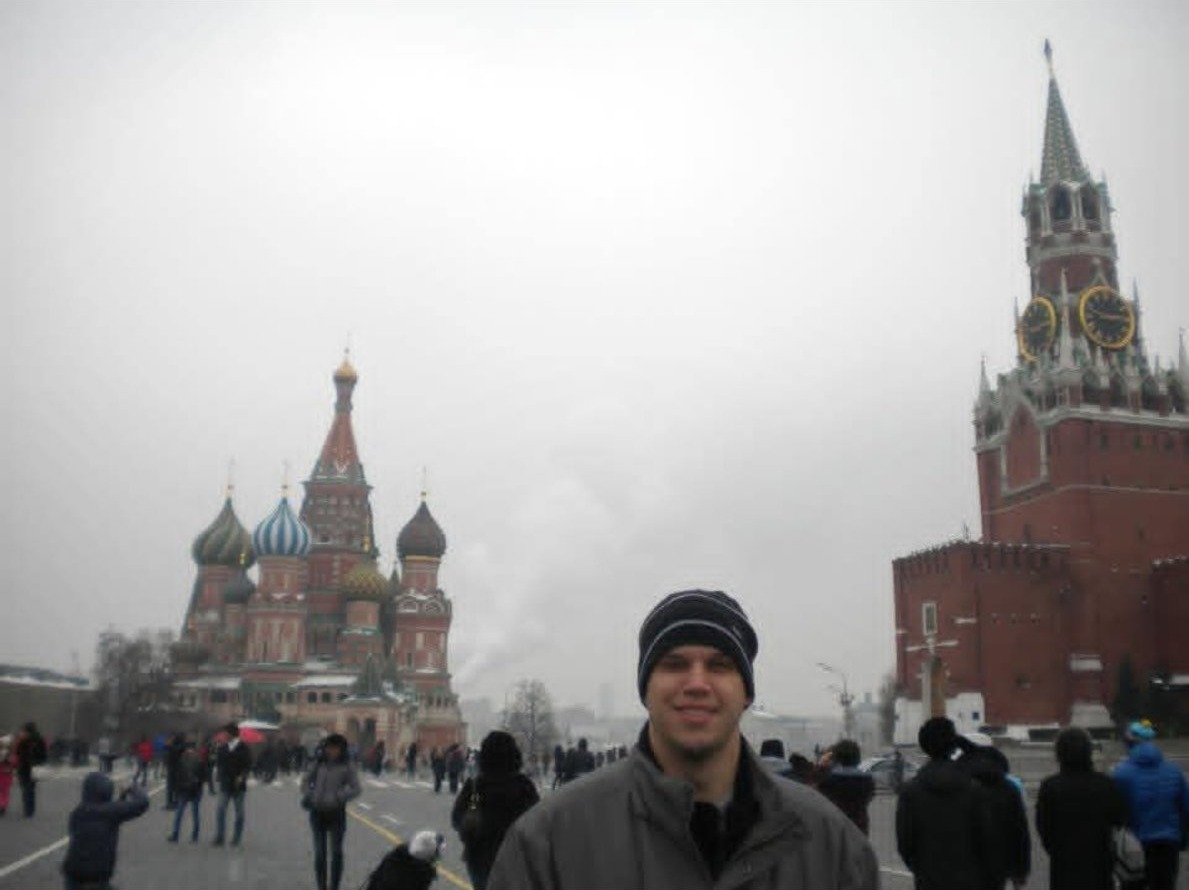
Standing in front of the wall
April 2013. A gray, cold morning in Red Square. Behind me, the red brick walls of the Kremlin and the Spasskaya Tower clock. To my left, the onion domes of St. Basil's.
What struck me most were the walls. They went up in the late 1400s and they're still standing. Not because they were built once, but because every generation since has kept repairing them.
I wasn't thinking about software that day. But the internet has walls too, and they need the same care. One of the biggest is PHP, the code running behind most of the web. Its newest version back then, 5.4, already had a crack in it, one that would go unfixed for the next 13 years. This summer, AI found it, and in October the world found out.
What happened
On October 21, PHP shipped emergency patches for two critical flaws now called PHP2Shell (CVE-2026-109618 and CVE-2026-109619). Both are rated 9.2 out of 10. They let an attacker with no password take over a web server, or read its memory, including passwords and API keys. (Wiz)
PHP is the engine under roughly 70% of the world's websites, including WordPress, Drupal, Joomla and Wikipedia. The flaw sits in PHP itself, so even a well-built site running on top of it was exposed. Every version back to 5.4 is affected.
The twist is who found it, and how. Security firm Calif, working with OpenAI, reported the first flaw on August 11. Wiz, owned by Google's parent Alphabet, reported more on August 24. (Al Jazeera) Wiz says one researcher with AI did in a week what used to take a world-class team months.
The reaction was immediate. The NSA issued a rare public warning: patch, or take your site offline. Germany, France, Belgium, the Netherlands, Finland and the Czech Republic pulled government sites while they patched.
The questions
If AI can surface a 13-year-old flaw in days, what's next? The same models are now being pointed at every other piece of software we depend on. PHP2Shell is unlikely to be the last.
Who gets there first? The AI that helps defenders find a flaw can help attackers build the exploit. Amazon spotted an exploit attempt on October 17, four days before any patch existed. (The Hacker News)
Is "too hard to exploit" still a defense? For years this flaw was considered too complex to weaponize. Wiz now argues that complexity may no longer be a meaningful barrier.
Who maintains the walls? PHP is kept running largely by volunteers and a nonprofit foundation. Should the companies that profit from it pay more toward its upkeep?
Do you know what your website runs on? Most small business owners I talk with here in Hawaii don't. They shouldn't have to, as long as someone is on the job. But is someone?
The concerns
The patch window has collapsed. Details leaked before the planned release, and disclosure moved up a day. Amazon had already logged an exploit attempt during the embargo. By October 26, CISA had added PHP2Shell to its catalog of actively exploited flaws. (Wiz)
A long tail of old servers. As of October 20, Modat counted 4.38 million internet-facing PHP services, 79% of them on versions that no longer get security fixes. (The Hacker News) Those are exactly the targets automated, AI-assisted attacks go after first.
Secrets may already be out. One of the flaws lets attackers read server memory, which can hold passwords, tokens and API keys. Patching closes the door. It doesn't un-leak what was already taken.
The maintainers are stretched. The PHP Foundation warned that "tools now find bugs faster than ever, for defenders and attackers alike." (Al Jazeera) The reports will keep coming, and volunteer teams will feel it first.
Not all bad news. Wiz reports that exposed vulnerable machines fell about 67% in the first few days, and no attempt it observed succeeded. But a week in, up to 53% of initially affected organizations were still vulnerable.
Conclusion: walls need keepers
AI is both the lockpick and the locksmith. This time the locksmiths got there first, because defenders used AI on purpose: OpenAI's Patch the Planet program, Calif, Wiz, the PHP team, and the cloud and hosting providers who readied protections before the details went public.
The lesson for business owners isn't to fear AI. It's that maintenance is the strategy. The walls behind me have lasted five centuries because people kept repairing them, not because someone built them perfectly once.
What I'd do this week:
- Ask your web host or developer which PHP version runs your site, and whether the October 21 update is installed.
- If you're on PHP 8.1 or older, schedule an upgrade. Those versions no longer get official security fixes.
- Change the passwords and API keys stored on any PHP server that sat unpatched.
- Put your site behind a managed host or web firewall that ships protections fast.
- Use AI on your side too. The same tools that found PHP2Shell can review your own code and settings.
When I took this photo, the clock on that tower was ticking, and so was a bug I'd never heard of. Today the clocks run faster. If you're not sure who is watching your walls, you are not alone. Get in touch and let's find out together.
Sources
- PHP2Shell: AI uncovers critical RCE vulnerabilities affecting 70% of the Internet, Wiz Research, Oct 21, 2026
- PHP2Shell: Exploitation attempts and remediation trends, Wiz, Oct 27, 2026
- World leaders warn of security flaws found in PHP programming language, Al Jazeera and Reuters, Oct 22, 2026
- Someone tried to exploit PHP2Shell four days before disclosure, The Hacker News, Oct 2026
- PHP got hacked by AI, DEV Community, Oct 2026